If the idea of joining a gym makes you break into hives (like it does me), take a deep breath, you’re not alone. The truth is, you don’t need expensive memberships, intimidating mirrors, or machines that look like medieval torture devices to get stronger, more flexible, and full of energy. I was surprised to learn that low-impact exercise can effectively be done without going to the gym.
After 50, what your body really wants is movement that loves you back, gentle, sustainable, and smart. Let’s ditch the guilt and talk about low-risk, high-reward ways to move your body in 2026 . . . from the comfort of your living room, backyard, or local park.
1. Morning Stretch Magic
Before coffee. Before emails. Before scrolling.
Stretch.
Think of it as a gentle wake-up call to your muscles and joints — an “I see you, and I appreciate you” moment.
Start with:
- Shoulder rolls (forward and back)
- Gentle neck tilts
- Cat-cow stretches (moving your spine between a rounded “cat” position and an arched “cow” position)
- A standing forward fold (bend those knees if necessary, no heroics required)
Do these for five minutes and you’ll feel taller, looser, and 10% sassier before breakfast.
WHY IT WORKS:
Improves flexibility, circulation, and posture while signaling to your body: “Hey, we’re awake now!” Plus, it makes pouring coffee feel like an Olympic warm-up.
Try a thick yoga mat with extra cushioning . . . your knees will thank you for it.
2. Walk Like You Mean It
Walking remains the simplest, safest, and most underrated form of exercise on earth. It’s a low-impact exercise that is joint-friendly, and free.
Aim for 30 minutes most days, but don’t overthink it. Split it into three 10-minute sessions if that’s easier. The secret is consistency, not perfection.
Upgrade your walk with mini challenges:
- Take a different route each week.
- Listen to a podcast or upbeat playlist.
- Invite a friend and turn it into “talk therapy on the move.”
If it’s cold outside, malls, museums, or even grocery store laps count. (Yes, cart lunges are a thing.)
Tip: Treat yourself to supportive walking shoes for happy joints and better posture.
3. Dance in Your Kitchen
Cardio doesn’t have to mean treadmills and misery. Sometimes it’s a spontaneous dance party while making soup.
Put on your favorite playlist (think Donna Summer, Lizzo, or anything that makes you shimmy) and move however you like for 15 minutes. It burns calories, boosts serotonin, and feels amazing.

No choreography needed, just joy. Remember, every queen deserves her groove moment.
WHY IT WORKS:
Raises your heart rate, releases endorphins, and reminds you that joy counts as cardio. Bonus: the grandkids will think you’re the coolest
4. Gentle Yoga (for Real Bodies)
If you’ve ever said, “I’m not flexible enough for yoga,” congratulations, you’re exactly who yoga is for.
Apps like Yoga for Beginners, StretchIt, or Down Dog let you practice at home at your own pace. You can even do chair yoga while watching TV.
The goal isn’t touching your toes, it’s connecting with your body and breath. And the side effects (better balance, calmer nerves, improved sleep) are delightful bonuses.
WHY IT WORKS:
Improves flexibility, balance, and relaxation, all while lowering stress hormones. No judgment, no pretzel poses required.
5. The Everyday Movement Trick
No time to “work out”? Perfect. Just sprinkle movement into your day:
- Do squats while brushing your teeth.
- March in place during commercials.
- Stretch your arms overhead while waiting for the microwave.
- Stand on one foot while washing dishes (bonus: balance training).
Think of it as accidental fitness, every little bit adds up.
WHY IT WORKS:
Turns daily habits into calorie-burning opportunities. Tiny moves, big impact, and zero time commitment.
6. Balance Builders
Falls become a real concern after 50, but balance exercises can keep you confident and steady. Try:
- Standing on one leg for 10 seconds at a time.
- Heel-to-toe walks across the room.
- Gentle Pilates-style core moves (like bridges or leg lifts).
These small steps strengthen your stabilizer muscles and keep you upright, literally and figuratively.
WHY IT WORKS:
Improves coordination and reduces fall risk . . . the ultimate midlife superpower.
7. Tai Chi or Qigong
These slow, flowing movements are like meditation in motion . . . graceful, soothing, and deeply restorative. Studies show Tai Chi improves flexibility, balance, and even mental clarity.
You can find hundreds of free YouTube videos or community classes, often led by local instructors who understand mature bodies.
Plus, you’ll feel like a mystical warrior goddess by week two.

WHY IT WORKS:
Gentle on joints yet powerful for strength, balance, and mental calm. It’s like meditation that secretly tones your muscles.
8. Use Tech as Your Fitness Friend
Your phone can be your new fitness buddy. Set reminders to stretch, stand, or hydrate. Use fitness trackers to measure steps, not obsessively, but playfully. Celebrate progress, not perfection.
If you’re competitive, challenge friends or family to “movement streaks.” Winner gets bragging rights and maybe brunch.
WHY IT WORKS:
Keeps you accountable and makes progress measurable. Nothing like seeing your step count rise to spark a happy dance.
9. Rest & Recovery (Yes, It Counts)
At this stage, recovery isn’t optional, it’s strategy. Muscles need time to repair and strengthen after movement.
Rest days, gentle stretching, hydration, and sleep all matter. Listen to your body. If something aches in a “wrong way,” swap it for something kinder. Schedule rest days, get 7–8 hours of sleep, and stretch gently after activity. Hydrate and nourish your body with care.
And remember: the only “bad” workout is the one that injures you.
WHY IT WORKS:
Muscles repair and strengthen during rest. Skipping recovery is like skipping dessert . . . you’re missing the best part.
10. Celebrate the Small Wins
Keep a “movement journal” or simple checklist. Write down each walk, stretch, or dance break. Did you walk an extra block? Stretch before bed? Dance while doing laundry? That counts. Movement isn’t punishment, it’s a privilege. Your body is your lifelong home, and every gentle step, sway, or stretch is a love note to yourself.
So this year, don’t chase abs or Instagram goals. Chase energy, laughter, and longevity. You’re not trying to be 25 again. You’re aiming to feel vibrant, capable, and gloriously alive at every age.
WHY IT WORKS:
Progress is motivational gold. Seeing what you did fuels momentum far better than guilt over what you didn’t.
11. Wall Push-Ups (Strength Without the Sweat)
When you want stronger arms but the floor and your knees aren’t on speaking terms, wall push-ups are the perfect peace offering. They’re easy, effective, and totally living-room-friendly, no gym mat (or audience) required.
- Stand about two feet from a wall.
- Place your hands on it at shoulder height, slightly wider than your shoulders.
- Bend your elbows and lean toward the wall (keep your body straight).
- Push back to your starting position.
Repeat 10–15 times, rest, and do it again.
WHY IT WORKS:
It strengthens your arms, chest, and core without stressing your wrists or shoulders. Bonus: it’s easier than convincing your grandkids to take a selfie with you.
12. Sit-to-Stand Squats (Functional Fitness)
You already do this movement every day, let’s make it intentional. Forget fancy equipment. This move turns an everyday action into serious strength training. It’s the kind of practical fitness that makes carrying groceries or getting out of a deep couch cushion feel like no big deal.
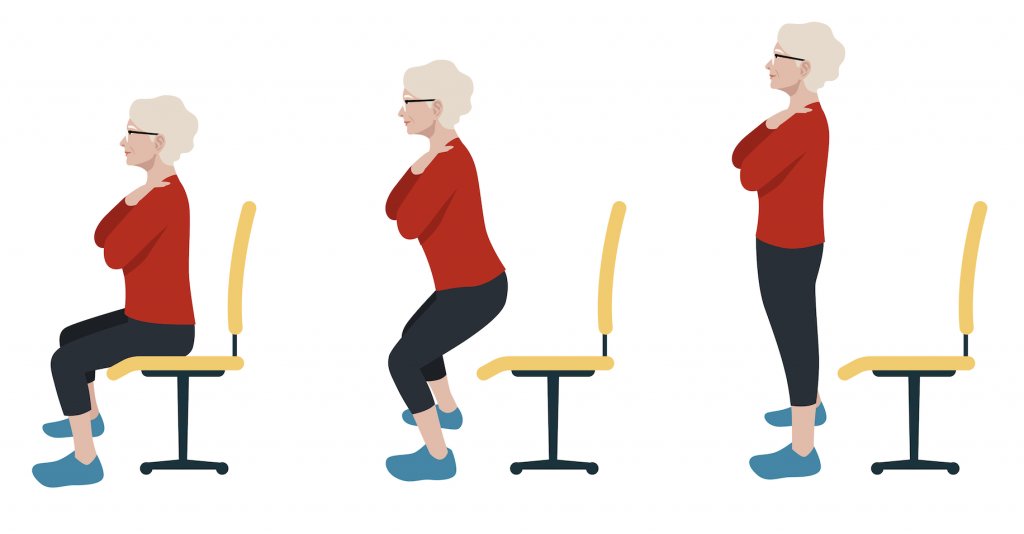
- Sit on the edge of a sturdy chair, feet hip-width apart.
- Cross your arms over your chest or keep them straight out for balance.
- Push through your heels to stand up.
- Sit back down slowly, that’s the real work!
Do 10 reps.
WHY IT WORKS:
Builds leg and core strength, improves mobility, and helps you move gracefully (and safely) through daily life, like getting up from that cozy couch after binge-watching your favorite show
13. Heel Raises (Simple, Elegant and Surprisingly Effective)
Stand behind a chair for support. Lift onto your toes, hold 2–3 seconds, then lower gently. Do 15–20 reps.
You don’t need a ballet barre to build graceful balance, just a chair and a few minutes. Heel raises are a tiny movement with major benefits for stability, posture, and lower-leg strength.
- Stand behind a chair or countertop, holding it lightly for balance.
- Slowly lift your heels off the floor so you’re standing on your toes.
- Hold for 2–3 seconds, then lower slowly.
Do 15–20 reps, rest, and repeat 2–3 times.
WHY IT WORKS:
Strengthens calves and ankles, improves balance, and keeps your stride confident. Easy enough to do while brewing tea.
Final Thought
Low-risk exercise isn’t about doing less, it’s about doing smarter. It’s the art of meeting your body where it is, celebrating what it can do, and saying, “We’re still in this together.”
So Stretch. Walk. Wiggle. Move like no one’s judging, because no one who matters is. And if you break a sweat vacuuming to Motown? Congratulations, that’s cardio!
Until next time, keep . . .