
We are right in the middle of the season when rich meals rise to the top of our activity list. And without doubt, all those holiday dinners we’re invited to (or make ourselves), affect our bodies in ways we don’t even want to think about. One way to combat these effects is learning the best order to eat food after 50.
Meal Sequencing, a new trick showing up everywhere in nutrition circles, and unlike the celery juice fad or the era when we let kale bully us, is gaining universal popularity and might just be the midlife metabolism ally we deserve. This gentle habit pairs well with other low-stress lifestyle changes, like incorporating low-risk movement into your routine without going to the gym.
So, grab your tea, put on your readers, and let’s talk about how to eat in a way that keeps your blood sugar happier than a grandmother with a baby in her arms.
So, What Is Meal Sequencing?
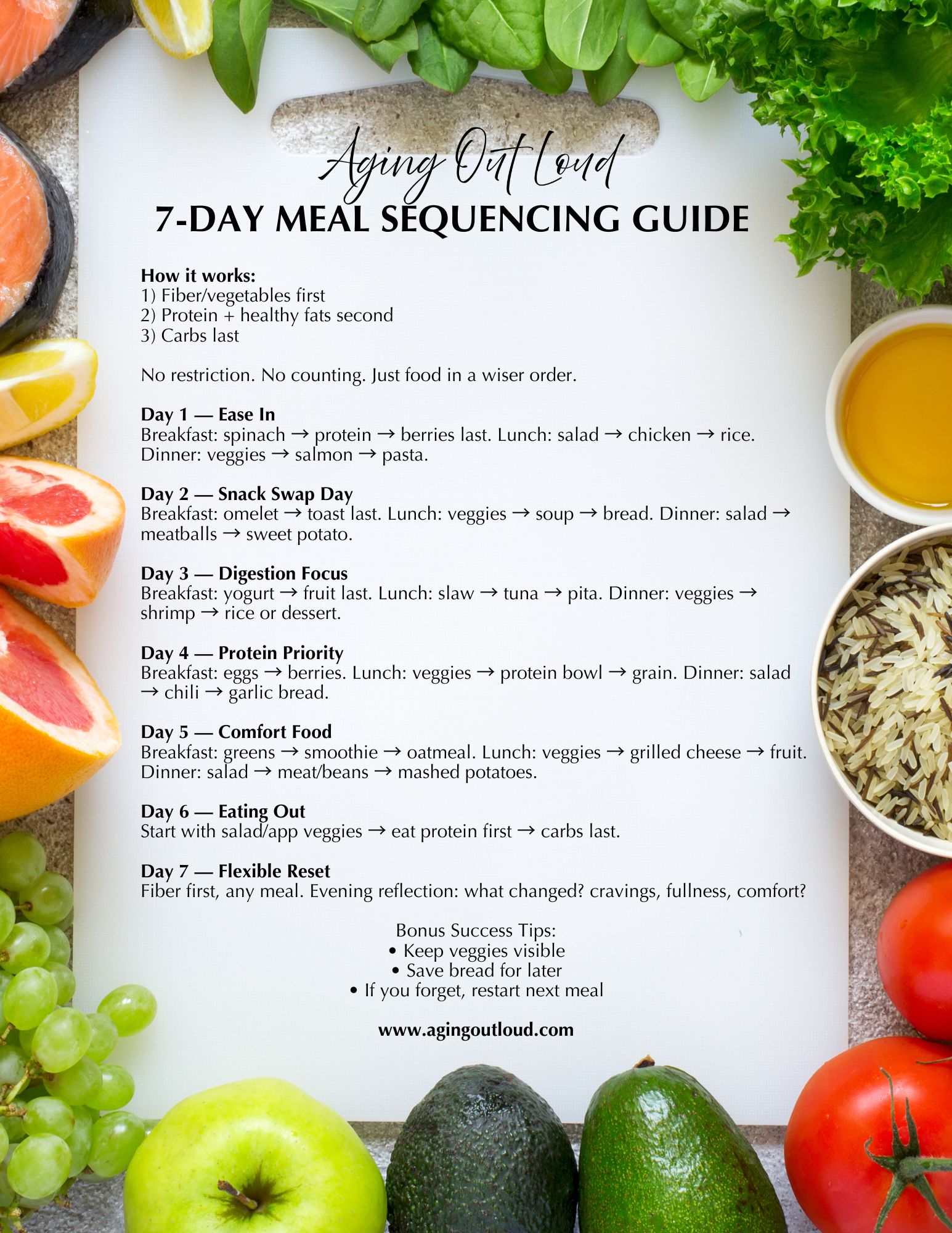
Think of it as mastering the best order to eat food, not as a rule, but as a strategy. The simplest version:
- Fiber + vegetables first
- Proteins and fats next
- Carbohydrates last
That’s it.
Not portion control, not calorie counting, not giving up joy, just rearranging what goes into your mouth first.
I know, it feels too easy. Like discovering that the secret to abs is just having a good tailor. But research is showing that this order keeps our blood sugar smoother, our insulin calmer, our cravings tamer, and our energy more stable.
Honestly, it feels like the nutritional equivalent of someone finally acknowledging that midlife women shouldn’t have to prove themselves anymore.
Why Women Over 50 Should Care (Even If We’d Rather Care About Wine)
As estrogen shifts during perimenopause and menopause, our blood sugar response becomes more dramatic than a teenager denied Wi-Fi. Sudden fatigue? Random cravings? Irritability for no reason Welcome, you’re in the club.
Meal sequencing helps because:
- Fiber slows digestion
- Protein stabilizes insulin
- Carbs get absorbed more gently
Meaning you get:
- Steadier energy
- Fewer “I need something sweet” episodes
- Less bloat and midlife tummy protest
- Better glucose response
And yes, studies show this approach helps with belly fat, inflammation, and insulin resistance, three uninvited guests that show up after 50 like surprise relatives.
What Are the Benefits of Meal Sequencing?
Meal sequencing might sound trendy, but the perks are surprisingly practical, especially for women over 50. Here’s what it can do for you:
• Steadier blood sugar – fewer crashes, mood dips, and “I need sugar now” moments.
• Reduced fat storage around the waist because insulin stays calmer.
• Fewer cravings – your body stays satisfied longer.
• Less bloating and smoother digestion thanks to fiber leading the way.
• More energy and clearer thinking – (your brain loves stable glucose).
• Easier weight management – you naturally eat less because you feel fuller.
• Hormone support – sequencing helps soften the post-50 glucose spikes that contribute to cravings, fatigue, and belly changes.
In short: You get more control, more comfort, and more consistency, without changing what you eat, just the order.
O.K. So Here’s How to Actually Do It
Let’s make it simple and Aging Out Loud-approved.
Step 1: Start with vegetables
A small salad, roasted broccoli, sautéed greens, or raw veggies. This isn’t punishment, think of it as an opening act to your meal.
Step 2: Move to protein + healthy fats
Chicken, salmon, tofu, beans, eggs, nuts, avocado, whatever fits your world.
Step 3: Enjoy your carbs last
Rice, pasta, bread, fruit, dessert, save the starches and sweets for the finale.
Think of it like a fashion show. Fiber is the runway walk, protein is the supermodel entrance, and carbs are the dramatic closing gown.
Real Life Example: Dinner Edition
Instead of diving straight into garlic bread (no judgment — we’ve all been there):
1. Eat a small green salad first.
2. Enjoy your salmon or chicken next.
3. THEN have the pasta or potatoes.
Same meal. Different order. Big difference in how your body handles it.
Imagine applying that level of intentionality to your dating life back in our 30s; we’d have avoided at least one man named Chad.
But Does It Really Work?
Short answer – yes.
Long answer – yes, especially for women dealing with belly weight, carb crashes, metabolic slowdown, aging hormones.
A study in Diabetes Care showed sequencing reduced post-meal blood sugar spikes by up to 75%. Another found cravings and hunger reduced dramatically when dinner started with veggies and protein. See? Our grandmothers ate soup and salad before the main course for a reason — without calling it biohacking.
The Sneaky Midlife Bonus
When your blood sugar doesn’t spike and crash, you:
✔ Sleep better
✔ Have fewer mood swings
✔ Don’t go hunting for chocolate at 10pm
✔ Feel satisfied with less food
It’s not dieting, it’s more like food choreography. We’re too fabulous to count calories, we sequence them.
What About Dessert?
Good news: Dessert isn’t “bad”, it just needs an escort. If you eat it after fiber + protein, your glucose spike is far smaller. So yes, that chocolate square, scoop of gelato, or gluten-free brownie is still invited. We’re Aging Out Loud, not denying ourselves joy.
Meal Sequencing Tips for Women Who Don’t Want to Overthink It
✔ Eat something green before anything white.
✔ Don’t start a meal with bread, save it for later.
✔ If you get hungry between meals, reach for protein first.
It’s not rigid, it’s rhythm. If you forget one day, just pick it back up. This isn’t algebra class, no one is grading us.
And that’s about it. If you want extra help, you can print the free Aging Out Loud 7-Day Sequencing Guide below and mount it on your refrigerator door.
Final Thoughts
While meal sequencing could be a regular part of your mealtime routine, even a one-off instance can have a positive impact. And sometimes, it’s not even possible to meal sequence effectively depending on what you’re eating. Oftentimes the fiber, protein, healthy fats, and carbs are all mixed together. If that’s the case, don’t worry about trying to force it.
Some wellness trends require: spreadsheets, monk-like self-discipline, or giving up bread entirely (absolutely not). Meal sequencing asks for none of this. It simply respects how the midlife body works now, like rearranging the dinner party so drama doesn’t sit next to the carbs.
And listen . . . We spent our younger decades doing extremes. Now? We’re doing wisdom. So go ahead, eat the bread. Just let the broccoli speak first. Cheers to food freedom, fewer cravings, and feeling GOOD in this second half of life. Because yes, we really are just getting started.
Until next time, keep . . .