
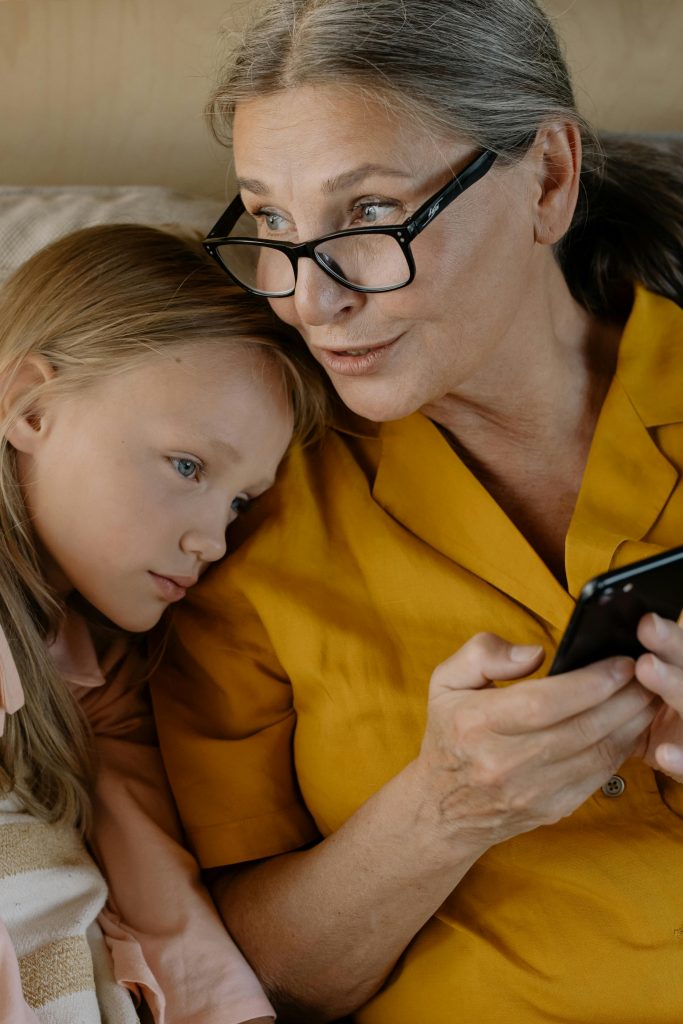
My grandmother had a voice that even today makes me feel warm inside as I think of her talking and laughing with me, and I’m sure you must feel the same. Whether we were cooking, watching one of her favorite game shows, shopping, or even when she was scolding me, her voice was special, and like no one else’s. I wish I could hear it right now as I write this blog. Fortunately, with all the technology at our fingertips today, creating loving memories for my grandchild is as easy as speaking into my cell phone. Plus it’s sharpening my technology skills and kids are excited to help us learn how it all works!
We all have great stories of our lives and recording them in our own voice is one of the most meaningful gifts we can create for your grandchildren, AND at the same time, for our children. (I also miss hearing my mom’s voice tremendously). It’s not just about preserving facts or family history. It’s about preserving you — your tone, your humor, your accent, your rhythm, your life.
So why not start today?
Why Your Voice Matters
There’s something unforgettable about a grandparent’s voice, the warmth, the cadence, the laughter tucked between syllables. It’s the sound of reassurance, love, and wisdom all wrapped together. But voices fade. Memories dim. And the stories that shape a family’s identity can disappear quietly unless someone captures them.
To your grandchildren, your voice is a living thread that connects them to their roots. It teaches them who they are and where they come from. It lets them feel your love long after you’re gone. Not as an idea, but as a sound that fills the room.
Children especially form deep emotional memories through sound. A recording of you reading a bedtime story, sharing a family recipe, or simply telling them you love them can comfort them for a lifetime.
Your voice doesn’t need to be perfect. It needs to be real.
Your Stories Are Family Treasures
Think about all the moments you’ve lived through; the things you’ve seen, learned, and survived. Each memory is a piece of living history. You’ve witnessed worlds change — from landlines to smartphones, from handwritten letters to instant messages, from women “knowing their place” to women taking their place everywhere.
The stories of your life, how you met your partner, your first job, what your mother taught you, what you wish you’d known at 30, are the kind of wisdom future generations can’t Google.
When you share your story, you’re giving your grandchildren something no one else can: the truth of their lineage in your own words.
Why Recording Beats Writing Alone
Writing your stories is powerful, but hearing them is something else entirely. The emotion in your voice: the pauses, laughter, and tears, adds layers that words on a page can’t capture.
Audio and video storytelling bring your stories to life. They allow your grandchildren to feel like they’re sitting across from you, listening, even decades from now.
Imagine them someday pressing “play” and hearing:
“When I was your age…”
“I want to tell you about the day you were born…”
“This recipe came from your great-grandmother, who could make cornbread with her eyes closed…”
That’s living legacy.
Getting Started: Simple Ways to Record Your Stories
You don’t need fancy equipment or a film crew. What matters most is starting.
Here are easy, accessible ways to capture your voice and memories:
1. Use Your Phone’s Voice Recorder
Every smartphone has a voice memo or recording app.
- Sit somewhere quiet and comfortable.
- Pick one story, don’t overthink it.
- Talk for five to ten minutes.
You can later upload these files to your computer, cloud, or even email them to loved ones.
2. Try a Video Call Recording
Apps like Zoom, FaceTime, or Google Meet allow you to record your conversation.
- Call your grandchild (or your child) and tell them a story.
- Laugh, reminisce, and record it.
- Save the file in a labeled folder, like “Stories with Grandma.”
3. Record While Doing Something Familiar
You don’t always have to sit down and narrate. Record while baking, gardening, or flipping through an old photo album. These casual moments often feel the most authentic — like letting your grandchild peek over your shoulder as you share your world.
4. Use a Storytelling App
Several apps are made specifically for preserving memories, such as:
- StoryCorps (free, easy, and archived by the Library of Congress!)
- StoryWorth (great for written prompts with optional voice notes)
- Voices Legacy App (specifically for audio legacy projects)
What to Talk About
Don’t pressure yourself to be profound. Sometimes the simplest stories carry the most meaning.
Here are a few ideas to get you started:
- Your childhood: What games did you play? What did your house smell like?
- Your parents or grandparents: What lessons did they teach you?
- The world when you were growing up: What’s changed the most?
- Love stories: How you met your spouse or partner.
- Proudest moments: Achievements big and small.
- Funny stories: The moments your family still laughs about.
- Wisdom: What you’d tell your younger self — or your grandchild as an adult.
- Traditions: Family recipes, holidays, or rituals that make your family unique.
- Hard times: What helped you get through them.
Remember, you’re not making a documentary. You’re making a memory bank. Imperfections are part of the magic.
How to Make It Feel Natural
Recording your stories doesn’t need to feel like a performance. In fact, it shouldn’t.
Here are a few tips to make it feel authentic:
- Pretend you’re talking to one person — maybe your granddaughter or your younger self.
- Don’t worry about mistakes. Pause, laugh, and keep going. The “ums” and stumbles are part of what makes it real.
- Add background sound if you like. The clink of dishes or a clock ticking can make your story feel alive.
- Keep sessions short. Ten minutes is plenty. A collection of shorter stories is easier to record and enjoy later.
Where to Store and Share Your Recordings
Once you’ve recorded your stories, it’s time to make sure they’re safely preserved.
- Cloud storage: Upload to Google Drive, Dropbox, or iCloud. Label files clearly (e.g., “Grandma’s First Job – 2025”).
- Flash drives: Copy recordings onto USB drives for each grandchild. It’s inexpensive, tangible, and meaningful.
- Private YouTube playlist: Upload your videos as “unlisted” so only your family can view them.
- Physical keepsake box: Include a USB, printed transcript, and a handwritten note.
If you love the idea of something more lasting, many companies now create “legacy audio books” or family story podcasts from simple voice files.
Encourage Conversation, Not Just Preservation
One of the greatest gifts you can give your grandchildren isn’t just your voice — it’s your presence. When you share your stories, you open the door for theirs too.
Encourage them to ask questions, record their reactions, or even add their own recordings. Imagine a digital family album where your stories weave together across generations — a chorus of voices that continues to grow.
The Healing Power of Storytelling
Recording your stories isn’t just about what you’re giving your grandchildren — it’s about what you’re giving yourself. Reflecting on your life can bring incredible healing and perspective.
You’ll rediscover how much you’ve lived, loved, and learned. You’ll remember the small details — the smell of your grandmother’s perfume, the sound of your children’s laughter, the lessons hidden in heartbreak.
Every time you tell a story, you reaffirm that your life matters. You give shape to your journey — and in doing so, you help your family understand their own.
Don’t Wait for “Someday”
Too often, we think we’ll “get to it later.” Later, when things slow down. Later, when we’re better prepared. But later can slip quietly into never.
Start small. Record one memory this week. Don’t worry about perfect words or the best microphone. Your loved ones won’t care about production quality — they’ll care about hearing you.
Someday, your grandchild will press “play” and hear your laughter spill through the speakers. They’ll hear the way you said their name, the warmth in your tone, and the love that fills the pauses.
That moment will mean more than you can imagine.
Final Thoughts
Every voice carries a story, and every story is a thread in the fabric of a family. Recording your stories ensures those threads don’t unravel . . . that your grandchildren (and theirs) will always have a piece of you they can return to.
Whether it’s a bedtime story, a family recipe, or a few minutes of reflection, your voice is more than sound . . . it’s legacy.
So pick up your phone, hit record, and speak.
Your grandchildren are waiting to hear the soundtrack of their heritage . . . your voice.
Until next time, keep living boldly, aging confidently, and AGING OUT LOUD.
*This post may contain commissionable affiliate links at absolutely no extra cost to you